

Mercy

Mercy
This contemporary icon is a radical act of translation — and resistance.
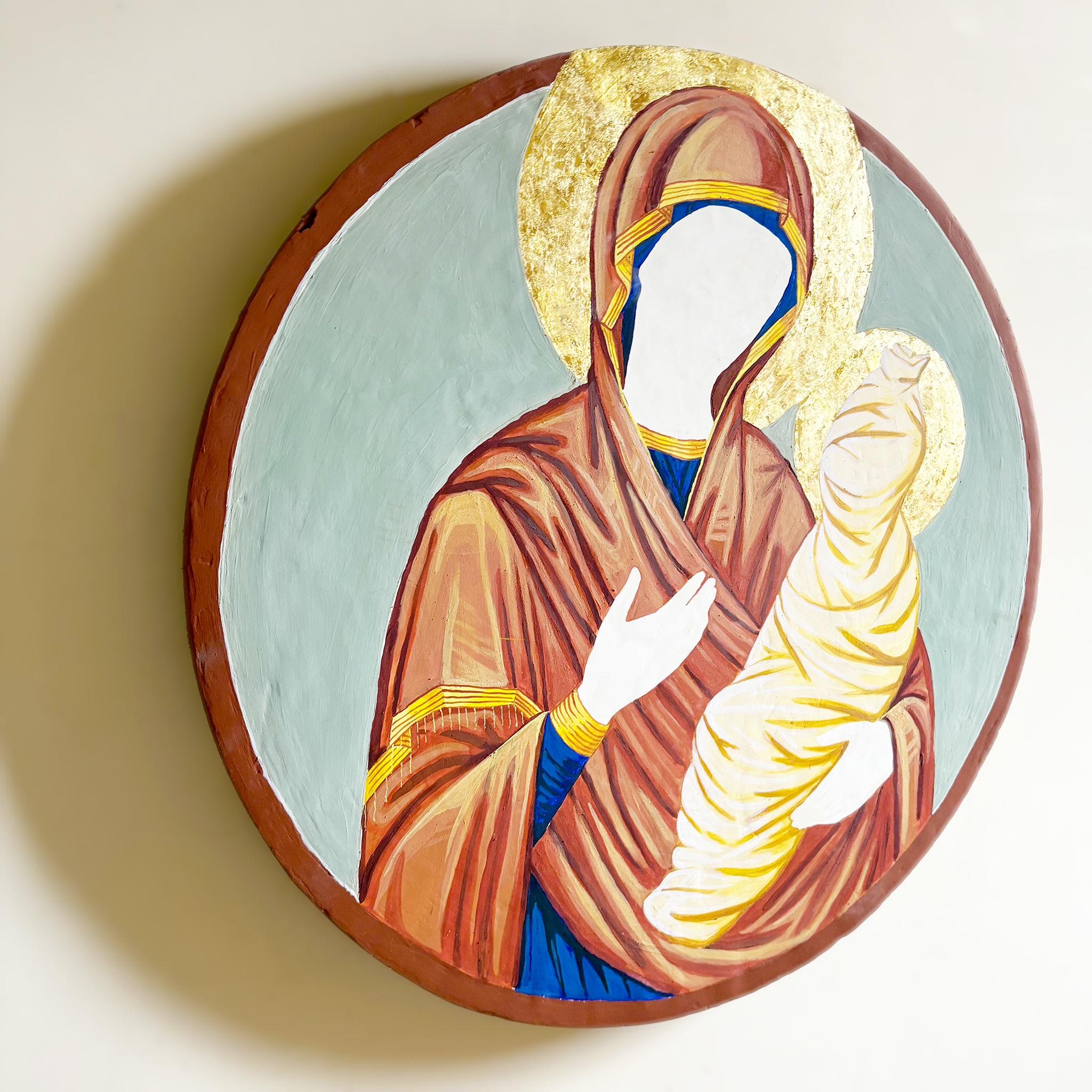
The artist summons a centuries-old image — the Pietà, the Mother cradling her dead Son — and transposes it into the present, entwining it with ongoing genocide and the obscene reality of lifeless children’s bodies.
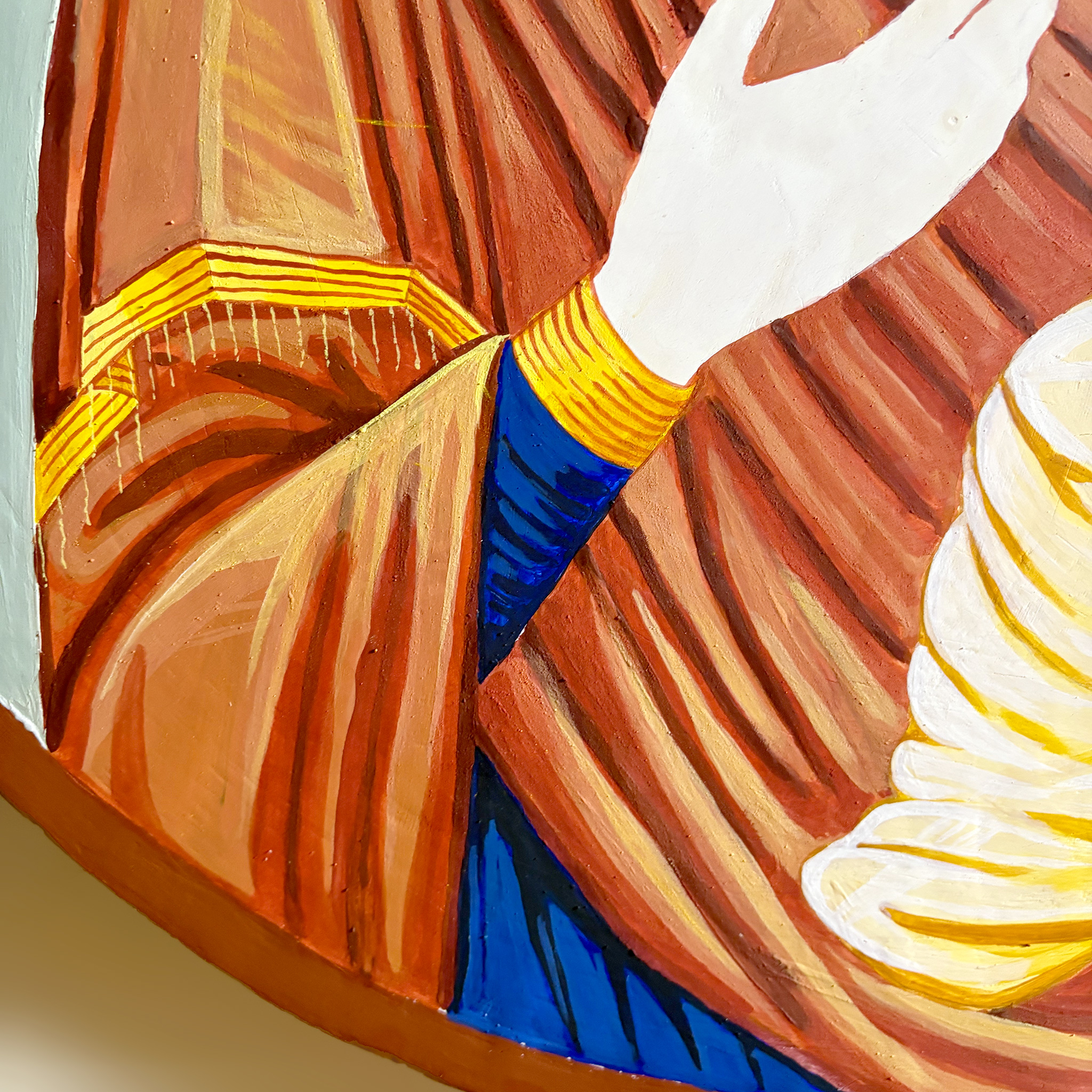
Painted with egg tempera and gold leaf on wood, in the tradition of Byzantine iconography, the work is not simply painted, but written.
An icon does not depict; it reveals.
It stands as a symbolic threshold between the visible and the invisible, theology and form — where every color, gesture, and compositional choice is encoded with meaning.
This is neither figuration nor abstraction: it is symbolic, hieratic, and grounded in a spiritual grammar that transfigures reality.
The absence of faces and hands is not an erasure, but a mode of revelation.
Icons do not portray likeness; they disclose saints, mothers, and children through attributes.
Just as Peter is recognized by his keys, and Lucy by her eyes, the Mother here is identified by her purple robe, the Son by his swaddled body — like a shroud foretold.
Two garments tell the story of two figures — and above all, their relationship.
No faces are needed; fabric alone speaks volumes.
The composition echoes Orthodox iconography of the Nativity, in which the Child, wrapped in swaddling cloth and laid in a stone manger, prefigures the entombed Christ — a visual synthesis of birth and death.
Pietà! is at once profoundly political and deeply theological.
Political, in its denunciation of indifference in the face of horror; theological, in its revelation of a God whose love endures death.
And necessarily pictorial — because only the icon, in its slowness, stillness, and frontal silence, can sustain the gaze upon the world’s suffering.
Date
13 February 2026
Category
icons